

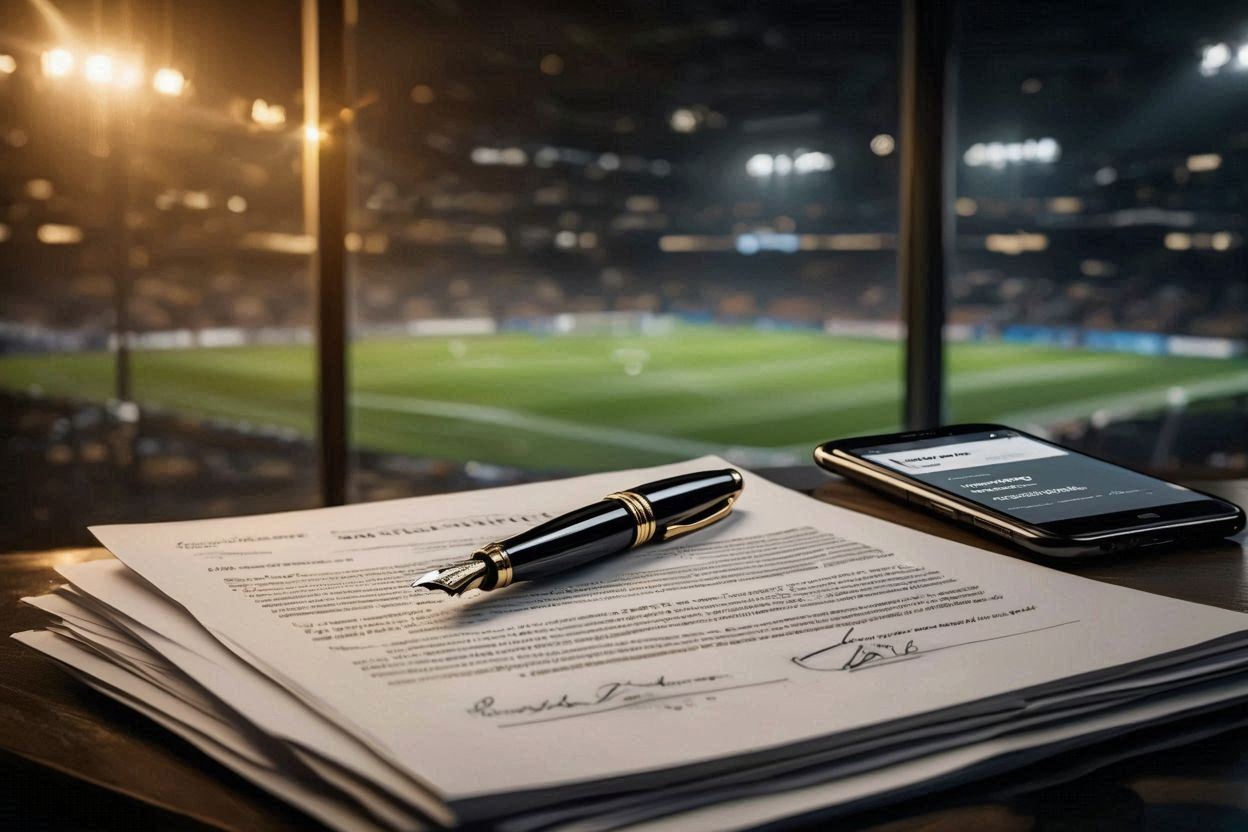
Twice a year, the football world goes mad. It is “Transfer Deadline Day.” Fans stay glued to their screens, tracking private jets and refreshing social media for the famous “Here We Go” announcement. But behind the glitz of the player holding the new shirt, there is a complex web of negotiations, legal contracts, and massive banking transactions. Why do some deals take months to complete? What exactly is a “sell-on clause”? And why do agents get paid so much? In this insider’s guide, we break down how football transfers work, revealing the hidden machinery that moves billions of dollars around the globe every season.
1. The Transfer Windows
Clubs cannot buy players whenever they want. FIFA mandates two specific periods, known as “Registration Periods,” popularly called Transfer Windows:
- The Summer Window: Usually runs from June/July to September 1st. This is when the biggest deals happen as clubs prepare for the new season.
- The Winter Window: Usually runs throughout January. This is often called a “panic window,” where desperate teams try to sign players to save their season.
If a deal is not signed and registered by the deadline (usually 11:00 PM or midnight), it collapses. We have seen famously failed transfers because a fax machine was broken or paperwork arrived one minute late!
2. The Transfer Fee: It’s Not a Suitcase of Cash
When you read that a player was bought for £100 million, the buying club rarely pays that amount upfront in cash.
Modern transfer fees are structured payments.
- Installments: A club might pay £20m now, and the remaining £80m over the next four years. This helps with cash flow and adhering to Financial Fair Play rules.
- Add-ons (Performance Bonuses): The deal might be £80m guaranteed + £20m in “add-ons.” These bonuses are triggered if the player wins the Ballon d’Or, scores 20 goals, or if the team wins the Champions League.
3. The Release Clause (Buy-out Clause)
A release clause is a set price written into a player’s contract. If a buying club bids this exact amount, the selling club cannot refuse the offer. They are powerless.
This is most famous in Spain (La Liga), where release clauses are mandatory by law.
- The Neymar Case: In 2017, PSG shocked the world by paying Neymar’s €222 million release clause. Barcelona did not want to sell him, but they had no choice because the price was met.
In the Premier League, these clauses are optional but are becoming more common to protect both the club and the player.
4. The Role of the Agent
Agents are often painted as the villains of football, but they are essential to how football transfers work.
The agent represents the player. Their job is to:
- Find a club interested in their client.
- Negotiate the highest possible salary (wages).
- Ensure legal protection and bonuses (like image rights).
For this service, agents charge a commission. This can be a percentage of the player’s salary (usually 3-10%) or a lump sum payment from the club. In mega-deals like Erling Haaland’s move to Manchester City, agent fees can run into the tens of millions.
5. The “Sell-On” Clause
Small clubs rely on this to survive. When a small club sells a young talent to a bigger club, they often insert a “Sell-On Clause.”
This entitles them to a percentage of the future transfer fee if the player is sold again.
-
Example: Club A sells a teenager to Club B for £1m with a 20% sell-on clause. Five years later, Club B sells him to Real Madrid for £100m. Club A receives a cheque for £20m—a fortune for a small team.
6. Loans: Try Before You Buy
Not all transfers are permanent. A Loan Deal allows a player to move temporarily to another club, usually for 6 months or a season.
- For Development: Big clubs loan young players to smaller teams to get first-team experience.
- For Financial Relief: If a club wants to get rid of a high-earning player they don’t use (like Romelu Lukaku at Chelsea), they might loan him out just to save on his wages.
Many loans now include an “Option to Buy” (the club can make it permanent if they like him) or an “Obligation to Buy” (they must buy him at the end of the loan).
7. The Medical and the Work Permit
Once the fee is agreed upon, two final hurdles remain.
The Medical: The buying club sends doctors to examine the player. They scan knees, ankles, and hearts. If they find a chronic injury, the deal can be cancelled instantly. Nabil Fekir’s failed move to Liverpool in 2018 is a famous example of a medical collapsing a deal.
The Work Permit: For international transfers (especially post-Brexit in the UK), players need a visa to work in the new country. If they haven’t played enough international matches for their country, the government might deny the visa, and the transfer fails.
8. Free Transfers (The Bosman Ruling)
Sometimes, players move for £0.
In 1995, a Belgian player named Jean-Marc Bosman won a landmark legal case. The Bosman Ruling changed football forever. It allowed players to move to a new club for free once their contract expired.
This gave huge power to players. Now, stars like Kylian Mbappé can run down their contracts and demand massive “Signing-on Fees” (cash directly to the player) since the new club doesn’t have to pay a transfer fee.
Conclusion
The transfer market is a high-stakes game of poker. It involves billionaire owners, savvy agents, and complex legal documents.
Next time you see a photo of a player smiling with a pen in his hand, remember the machine behind the moment. From installments to sell-on clauses, understanding how football transfers work makes following the window even more fascinating.
What is the best (or worst) transfer your club has ever made? Share your thoughts in the comments!

